

Anna Scetinina, MA, MACP, RP
Hi, I am Anna, a registered psychotherapist and the author of A Workbook for Kids Who Worry.
I provide individual therapy helping children, teens, adolescents, and adults deal with OCD, anxiety disorders (social phobia,agoraphobia, paruresis - “shy bladder” syndrome, specific phobias, GAD, panic disorder), panic attacks, depression, emetophobia, body dysmorphic disorder (BDD), body-focused repetitive behaviour (BFRB), including trichotillomania (hair-pulling) and excoriation (skin-picking), tic disorder (TS, motor and vocal tics), stress, misophonia, perfectionism, and low self-esteem. I also provide support for addressing parental concerns.
Therapeutic Approach
Therapeutic modalities that I use with my clients include ACT (Acceptance and Commitment Therapy), CBT (Cognitive Behavioral Therapy), ERP (Exposure and Response Prevention), I-CBT (Inference-based Cognitive Behavioral Therapy), Solution-Focused Therapy, Compassion-Focused Therapy, and mindfulness-based interventions.
We will collaboratively decide what approach would be the best for you, based on the concerns you want to work on.
Obsessive-Compulsive Disorder (OCD)
Our clinic specializes in treating obsessive-compulsive disorder (OCD). I see clients who have different subtypes of OCD, including the following:

Contamination obsessions. Fear of germs and/or chemicals, magical contamination OCD.
Morphing OCD. Fear of getting somebody else’s undesired features, personal qualities, or personality traits.

Harm OCD. Intrusive thoughts and/or disturbing images about harming oneself (suicidal OCD) or others, or fear of something terrible happening to oneself or loved ones.
Hit-and-run OCD. Fear of accidentally harming/hitting a pedestrian without noticing while driving, crossing an intersection, going over a bump on the road, or leaving a parking lot.
Insult OCD. Fear of saying/blurting out/writing the wrong things, including something inappropriate, insulting, or offensive.
Sexual orientation OCD (SO-OCD, HOCD). Intrusive thoughts and doubts about sexual orientation.
Moral scrupulosity obsessions. Preoccupation with right or wrong, anxiety about being a good
person/bad person, rigid rule-following, excessive worries about breaking rules.
Existential OCD. Existential obsessions about life, including obsessively questioning reality and one’s life purpose.

Religious obsessions. Worries about possibly acting sinfully and/or being a blasphemer, or being not religious enough.

Just-right OCD. Urges to do things in a specific way, such as arranging objects until they feel right, touching things in a certain way until it feels right, and experiencing anxiety about things feeling incomplete.
POCD. Fear of being or becoming a pedophile, disturbing, intrusive thoughts, and images involving children.
Relationship OCD (ROCD). doubts about relationships, doubts about attraction to the partner or partner’s attraction, doubts about whether being in the right relationship, and whether to stay or end the relationship.
Real event or real-life OCD. Intrusive thoughts about past events (fear that something bad, immoral, or inappropriate was done/happened) that cause intense fear and guilt.
False memory OCD. Intrusive thoughts about events that could have taken place, and feeling unsure whether a specific memory is accurate.
Hoarding and digital hoarding. Difficulty letting go of possessions because of a perceived need to keep them when they have no sentimental value, need to save digital content/files and keep them in order.
Memory hoarding OCD. Obsessive need to ensure things are remembered.
Magical thinking. Believing that having a thought/memory/feeling can cause actual bad events to happen and feeling a strong urge to prevent that by doing mental or physical rituals.
OCD about OCD/Meta-OCD. Doubting whether you have OCD, fear of maybe having a different mental health illness, fear of never knowing for sure your condition, fear of possibly being in the wrong treatment, questioning your recovery/therapist/approach/response to obsessions.
Optimization OCD. Intrusive thoughts about choosing the most efficient way of getting to places or doing things, for example, scheduling activities by time and order so that getting there happens in the most efficient way. Deviation from that pattern can cause anxiety or guilt about wasted time and/or resources.
All other “pure-O” OCD presentations. Disturbing, intrusive thoughts and images of a different nature without the presence of physical rituals/compulsions.
Health OCD. Preoccupation with one’s health and living a healthy life, fear of having or developing a serious illness, such as cancer, ALS, or another serious condition.
All other unique OCD presentations, such as TOCD (Tourettic OCD), staring OCD, VT-OCD, sensorimotor OCD (hyperawareness of bodily functions, sensations, smells, sounds), disgust OCD, OCD about bodily fluids and excretions, sticky substances.
If you have any of these types of obsessions, you probably engage in some of these compulsions:
- Physical compulsions (cleaning, checking, knocking, touching, confessing, apologizing,
searching/googling, arranging, testing, repeating, seeking reassurance);
- Mental compulsions (counting, self-reassuring, reviewing, comparing, self-criticizing, playing
scenarios in your head, ruminating, neutralizing, thinking positive thoughts, checking if thoughts are there, engaging in compulsive reasoning, scanning body for symptoms of illness or specific unpleasant sensations).
- Avoidance (avoiding triggering places, objects, words, thoughts, memories, people).
If you are dealing with any of these obsessions and compulsions, I can help you understand how OCD works and what things you presently do that reinforces your OCD and keeps you stuck. We can plan together what changes to make to reduce your ineffective responses and help you build a life you want, where you (not your OCD!) are in charge. As part of the treatment process, we will work on reducing family accommodations and increasing family support.

I use evidence-based treatment options for addressing your OCD:
1) A combination of ACT and Exposure Therapy (ERP)
2) I-CBT approach, which is a gentler and more compassionate alternative to exposure therapy
for the treatment of OCD
For OCD, clients often seek a specific treatment approach, most commonly ERP or, more recently, I-CBT. In my practice, I frequently integrate ERP with ACT, helping clients not only face their OCD fears but also build cognitive, emotional, and behavioural flexibility, reconnect with their values, and create meaningful changes that enrich their lives beyond OCD symptoms.
For clients who prefer an alternative evidence-based approach or who feel stuck with ERP, I-CBT offers another effective treatment option. Rather than relying on exposure exercises, I-CBT helps clients recognize that OCD doubts are based on imagined possibilities rather than present-moment reality. Together, we learn to distinguish OCD's compelling—but entirely fabricated—stories from direct sensory information, common sense, and everyday knowledge. This often helps clients regain trust in their own ability to rely on reality-based reasoning rather than OCD's narratives.
When clients come for OCD therapy, we collaboratively determine which therapeutic approach—or combination of approaches—best fits their needs, preferences, and goals.
Emetophobia
Emetophobia is an intense fear of throwing up or others throwing up. This fear often causes a sufferer a lot of shame, makes them avoid doing things, eating specific food (or restrict/limit eating), and going places, and makes them put all their efforts into trying to prevent the fear from coming true. They also have a lot of difficulty tolerating the uncertainty of everyday life. Together, we can work on helping you free yourself from emetophobia, build a life worth living, and start doing things you have been avoiding due to your fear.

Illness anxiety/hypochondria
Having health concerns is normal, but when you have illness anxiety, you may be preoccupied with and have an intense fear of developing a serious illness or having an undetected serious illness, and this fear takes up a lot of your time, pulls you out of being present, and can significantly impact your life. If you frequently check your physical symptoms, Google (or use AI to ‘consult’ about your symptoms) or avoid googling, call doctors, or avoid calling doctors, seek reassurance, I can help you learn to respond to your thoughts, sensations, and feelings more flexibly. Together, we will work on breaking the cycle of anxiety and helping you learn to live with uncertainty while fully engaging in your life.
Perfectionism
If your desire for achievement and delivering great work has turned into a rigid rule and your mind demands that you do things perfectly, you might be dealing with unhelpful perfectionism.
It can show up in excessive time spent studying, checking, and reviewing material, and yet no matter how much time you spend, you feel your work is ‘never good enough.’ I work with students devastated when they don’t get a 100 on a test and with professionals who sacrifice their family life and self-care for endless attempts to perfect their work reports. If this sounds familiar, we can explore your fear and help you learn to let go of doing things that limit and drain your life and let your values guide your actions.
Depression
Loss of interest in life and in doing activities that you found enjoyable in the past, persistent sadness, irritability, change in appetite or sleep schedule, lack of energy, guilt, suicidal thoughts, and ideations - these are things that you might experience when you are depressed. We can work together on helping you find motivation in life, explore your values, reduce doing things that keep your mood low, and increase behaviors that enrich your life to overcome depression.
Misophonia
People with misophonia are emotionally impacted by common sounds, such as people breathing, chewing, yawning, tapping, or making repetitive noises. If these or other sounds make you feel fearful, disgusted, angry, or panicky and give you intense anticipatory anxiety before social events or make you avoid triggering situations, you probably are struggling with misophonia. In therapy, you learn to use your attention flexibly, expanding your focus and shifting it where you choose to while learning to tolerate distressing sounds better and reduce their impact on your life.
Working with children and teens
Many of my clients are children and teens ages 9 to 17. They come with various concerns, including perfectionism, phobia, social anxiety, OCD, behavioral issues, and emotional regulation issues. Sometimes, e-therapy with a child is challenging; in such cases, I provide parental training to help parents respond to their child’s behavior more effectively. I incorporate engaging exercises, art, and visuals into my therapy work when working with younger clients. Coordinating and planning support for the child or teen with parents is essential for success in recovery. At the first session, we plan how to provide updates, discuss concerns, and progress in maintaining the child’s confidentiality and respecting the parent’s right to information.
Working with neurodivergent clients
I provide online psychotherapy for neurodivergent children and teens, including children with autism / Autism Spectrum Disorder (ASD), ADHD, and AuDHD, who are struggling with anxiety, OCD, perfectionism, emotional regulation difficulties, rigid or repetitive behaviours, school-related stress, and parent-child conflict around anxiety or avoidance. I am trained in ACT for Autism and Neurodivergence and provide neurodiversity-affirming, evidence-based therapy tailored to each child’s strengths, developmental profile, and clinical needs.
Anxiety and OCD commonly co-occur with autism and ADHD, but they are sometimes missed or misunderstood. OCD-driven behaviours, such as avoidance, reassurance seeking, “just-right” compulsions, rigid rituals, checking, confessing, or mental reviewing, can sometimes look similar to autism-related routines, repetitive behaviours, sensory preferences, or stimming. I work with children, teens, and parents to clarify what is anxiety- or OCD-driven and what is related to neurodivergence.
For families registered with the Ontario Autism Program (OAP), mental health services, including counselling and psychotherapy, are listed in the OAP guidelines for core clinical services and supports. Families are encouraged to confirm directly with the OAP whether psychotherapy with a Registered Psychotherapist is eligible under their child’s specific funding allocation.
Parental Training
If you need support in dealing with parental stress and your children’s challenging behaviours, we can collaboratively identify your goals and needs and work on making changes in your behaviour and your responses to triggering situations to impact your children’s behaviours positively. I also work with parents of children and teens to help them specifically address their children’s anxiety, fears, and OCD using a specialized approach called SPACE (Supportive Parenting for Anxious Childhood Emotions), which focuses on reducing accommodations at home and increasing effective support..
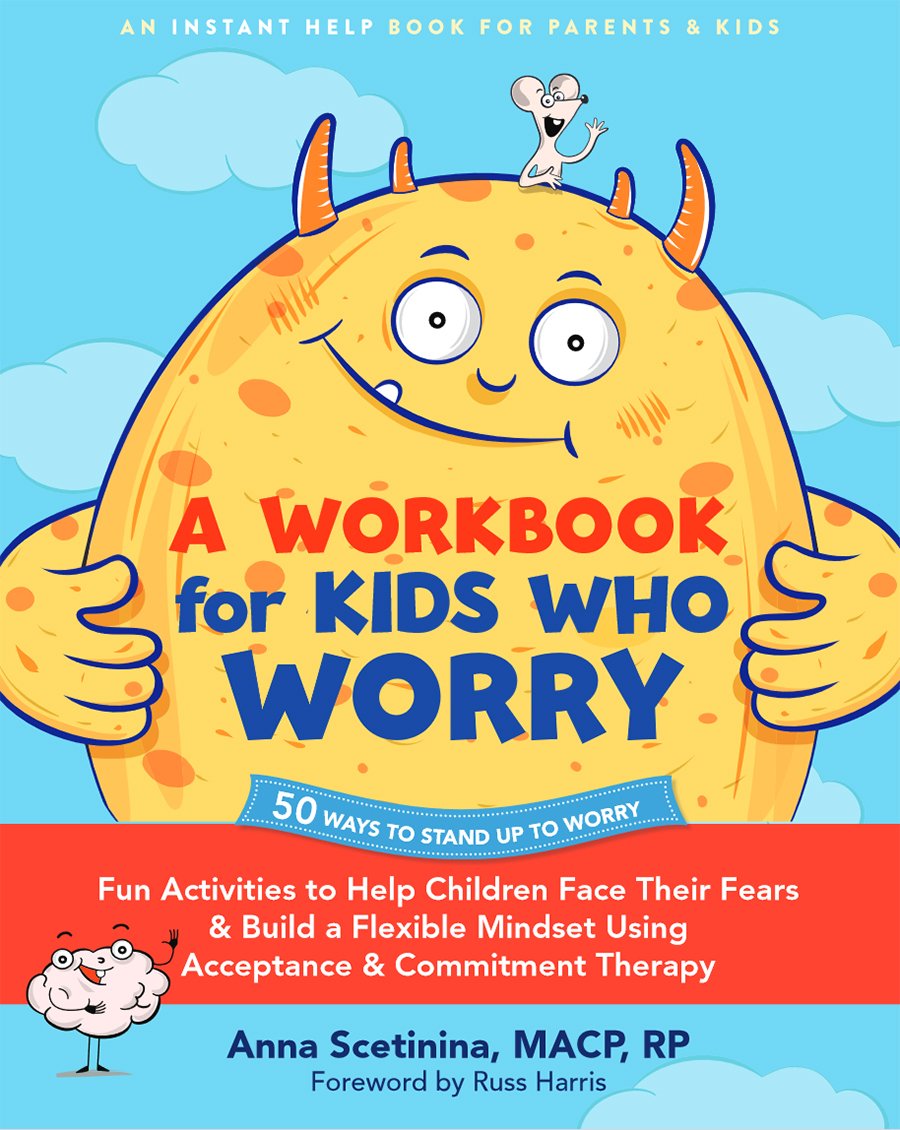
I am the author of A Workbook for Kids Who Worry, published by the New Harbinger Publications in 2025. Fun and evidence-based acceptance and commitment therapy (ACT) skills to help kids face their fears and live joyfully. Written for children ages 5 to 12, this fun and engaging workbook is based on proven-effective acceptance and commitment therapy (ACT) to help kids understand their worries, recognize their thoughts and feelings, and discover what they can and cannot control. Packed with friendly illustrations and exercises, kids can embark on a playful adventure of self-discovery. They will also learn to deal with unpleasant thoughts, work through difficult emotions, and develop a flexible mindset.

Click on the image to listen to the audio

Click on the image to listen to the audio

Click on the image to listen to the audio

Click on the image to listen to the audio

Click on the image to listen to the audio






Mandy Taylor, M.Ed, C.Psych
Book an Appointment
Back to All Profiles